
Working Together for Safer Roads in Grays Harbor
The Grays Harbor Council of Governments (GHCOG) works with local, regional, and state partners to support a safer transportation system for everyone who travels throughout Grays Harbor County.
Transportation safety planning uses data, community input, and coordination among jurisdictions and agencies to better understand where and why serious crashes occur and identify strategies that can reduce traffic deaths and serious injuries.
Target Zero
Target Zero is Washington State’s Strategic Highway Safety Plan and establishes the statewide goal of zero traffic deaths and zero serious injuries by 2030.
The 2024 Target Zero Plan was developed with input from communities, Tribal partners, local jurisdictions, state agencies, and Washington road users. The plan provides a framework for identifying transportation safety priorities and implementing strategies across Washington.
Explore Traffic Safety Data
Understanding local crash trends is an important part of transportation planning.
The Target Zero Performance Dashboard, maintained by the Washington Traffic Safety Commission, allows users to explore traffic safety data and trends throughout Washington, including information at the county level.
The dashboard can be used to examine:
- Traffic fatalities and serious injuries
- High-risk behaviors, including impairment, speeding, distraction, and lack of restraint use
- Crash types and locations
- Road users by age group
- Road users by mode of travel
- Trends over time
Explore the Target Zero Performance Dashboard
When using the dashboard, select Grays Harbor County to explore information specific to our area.
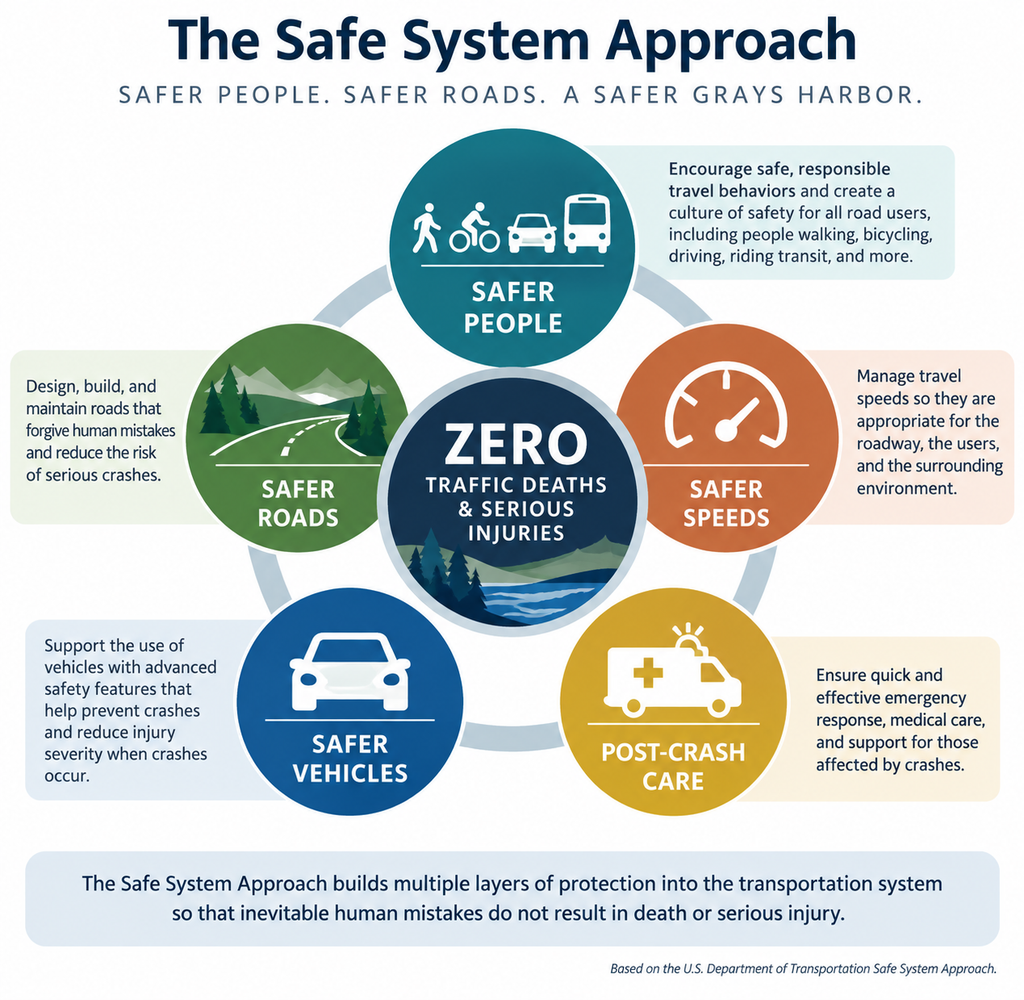
The Safe System Approach
Washington’s Target Zero Plan incorporates the Safe System Approach, which recognizes that people make mistakes and that transportation systems should be designed so those mistakes are less likely to result in death or serious injury.
Rather than relying on any single safety strategy, the Safe System Approach creates multiple layers of protection. Transportation safety can involve roadway design and operation, appropriate travel speeds, vehicle safety, responsible road-user behavior, and effective emergency response.
The goal is to strengthen all parts of the transportation system so that when one layer fails, other safeguards are in place to reduce the likelihood or severity of a serious crash.
Learn more about the Safe System Approach through Target Zero.
Safety Priorities and Strategies
The Target Zero Plan identifies transportation safety issues and strategies through several emphasis-area categories:
High-Risk Behaviors
Issues such as impaired driving, speeding, distracted driving, and unrestrained vehicle occupants.
Crash Types and Locations
Safety concerns associated with particular types of crashes and roadway environments.
Road Users by Age
Safety considerations affecting different age groups, including younger and older road users.
Road Users by Mode of Travel
Safety for people driving, walking, bicycling, motorcycling, and using other forms of transportation.
Target Zero also identifies strategies and countermeasures that state, regional, and local partners can consider when addressing these safety priorities.
Regional and Local Safety Planning
Working Toward Safer Transportation in Grays Harbor
Traffic safety requires collaboration among local governments, transportation agencies, law enforcement, emergency responders, community organizations, and the traveling public.
GHCOG supports regional coordination and transportation planning on behalf of its member jurisdictions and works with partners including the Washington State Department of Transportation and Washington Traffic Safety Commission.
As regional transportation safety planning efforts develop, this page will provide information about plans, studies, community engagement opportunities, and other resources relevant to Grays Harbor County.